
Jacqueline Maisonpierre doesn’t seem to mind getting her hands dirty.
As the farm manager at New Haven Farms, Maisonpierre (pictured third) splits her time between seven tiny patches of cultivated earth, nestled into unlikely street corners and commercial land fragments around the eastern half of the city. Together, these itty-bitty farms pack a wallop, producing thousands of pounds of vegetables each growing season, from cherry tomatoes to chard, cucumbers to collards, scallions to squash.
A mere four summers ago, in 2010, New Haven Farms’s output was zero pounds, because it didn’t yet exist. But its roots were already forming. Back then, NHF executive director Rebecca Kline was working on the diabetes prevention program at the Fair Haven Community Health Center, to which Chabaso Bakery had recently offered the use of a small patch of land. Turned into a food and teaching garden, it would directly address the factors that can alleviate or even reverse diabetes, like better nutrition and increased physical activity.
sponsored by

That summer, the initiative seemed to be working, and Kline saw in it the seed of something broader and more permanent. After much planning and prepping, New Haven Farms was born in 2012, with 2014 marking the organization’s third official growing season.
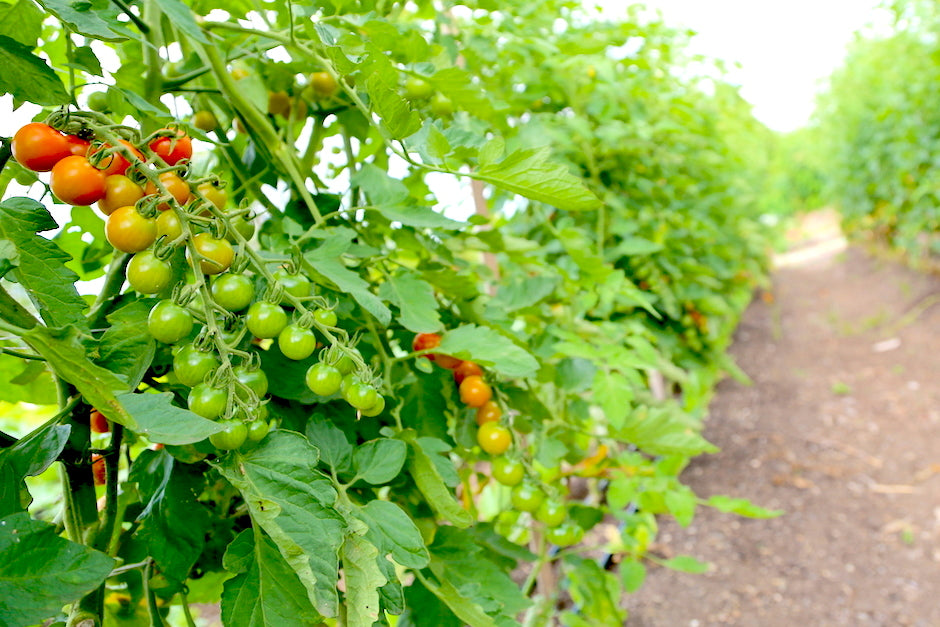
This summer and fall, across NHF’s seven farms (most of them in Fair Haven), 315 people from 63 families are planting, harvesting and composting their own veggies, while also taking classes on nutrition and cooking. During a recent visit to the group’s Phoenix Press Farm, situated next to Phoenix’s brick-building headquarters on James Street, participants picked blushing cherry tomatoes and learned the recipe for a spicy cucumber salad, tasting the yummy results.
That particular plot of repurposed earth is located beneath “Gus(t)”—Phoenix Press’s famous wind turbine, which rises from a chain-link shed filled with wheelbarrows and other tools—and shows what dedicated people can do with just a quarter-acre of land. A woodchip path borders neat, thriving rows of greenery dotted with veggies, like plump purple eggplants, small multicolored tomatoes, shiny green peppers and bumpy yellow squashes. Sometimes the greenery is the veggie, as in the case of a billowing row of kale.
sponsored by

That’s just a fraction of what’s going on at this tiny spot among seven in total, and, according to Kline, conversations are underway to add much more land to the portfolio. An effort to plant on a full acre near Tweed Airport is awaiting FAA approval, while the city of New Haven, already leasing four previously abandoned lots to the organization as part of its Livable City Initiative, may be putting up another acre and a half.
Joining NHF’s membership is a little bit like enrolling in a CSA program, only the benefits go deeper as a result of those aforementioned classes, and you can’t actually buy your way in. Instead, members start out as patients at the Fair Haven Community Health Center, which refers them to NHF, which in turn fulfills its core mission to aid lower-income families suffering from—or at high risk of developing—nutrition-related health problems. Members then embark on a 20-week journey stretching from June to October, which includes attending weekly two-hour learning sessions.
Cooking demonstrations, offered in English and Español, result in food for the families to take home for dinner. Even better, families take home enough fresh fruits and vegetables from these occasions to last them until the next week’s gathering. A generous member of the NHF board, Jonathan Bishop of Bishop’s Orchards in Guilford, donates the fruit—apples, pears, blueberries, raspberries, peaches—that complements the vegetable-strong bounty grown onsite. By the end of the program, many participants are inspired and confident enough to grow their own produce at home, we’re told.
In curating the produce to be grown in the NHF gardens, variety is top of mind. Under Maisonpierre’s hands-on guidance, unexpected plantings sprout, from purple string beans to yellow carrots. Quality is also a priority, which could help explain why picky restaurants like Chapel Street’s Atticus Bookstore Cafe and College Street’s ROÌA Restaurant regularly buy ingredients from NHF.
Back at the Phoenix Press Farm, the sun descends on pollinating insects browsing golden marigolds planted just for them. Birdsong drifts through the soundscape of the city, and a fresh summer breeze sends Gus(t) spinning, pumping juice into the nearby printing press. On the horizon, cars and trucks whiz across the Q Bridge; much closer, on the other side of a roadside chain-link fence, athletes whiz past each other on basketball courts in Criscuolo Park.
Against this clash of civilizational and pastoral trappings, as it does in so many other implausible corners of the city, New Haven Farms still manages to fit right in.
New Haven Farms
(203) 915-1892 | newhavenfarms@gmail.com
www.newhavenfarms.org
Written by Bonnie Goldberg. Photographed by Dan Mims.


